8 minutes, 50 seconds
-16 Views 0 Comments 0 Likes 0 Reviews
Healthcare careers continue to evolve as organizations adopt new technologies, strengthen compliance requirements, and focus on better patient outcomes. In 2026, certifications are becoming increasingly important for professionals who want to stand out in a competitive job market.
Whether you work in patient care, healthcare administration, medical coding, health information management, or healthcare technology, earning a respected certification can help validate your expertise and improve career opportunities. Many employers now view certifications as proof of specialized knowledge and commitment to professional growth.
The healthcare industry no longer relies solely on academic degrees when evaluating candidates. Employers increasingly seek professionals with targeted skills that align with specific organizational needs. Certifications help bridge the gap between education and practical workplace requirements. They demonstrate competency in areas such as coding accuracy, healthcare quality, patient safety, compliance, leadership, and digital health systems. As healthcare systems become more data-driven and technology-focused, specialized credentials are gaining more value across multiple healthcare sectors.
Before investing time and money, professionals should evaluate certifications based on several important factors:
A certification should help open doors to higher-level positions, leadership opportunities, or specialized roles.
Widely recognized certifications tend to provide stronger value because employers are already familiar with their standards and requirements.
Certifications linked to growing healthcare sectors often offer better long-term career stability.
The best credentials teach skills that healthcare organizations actively need today and will continue needing in the future.
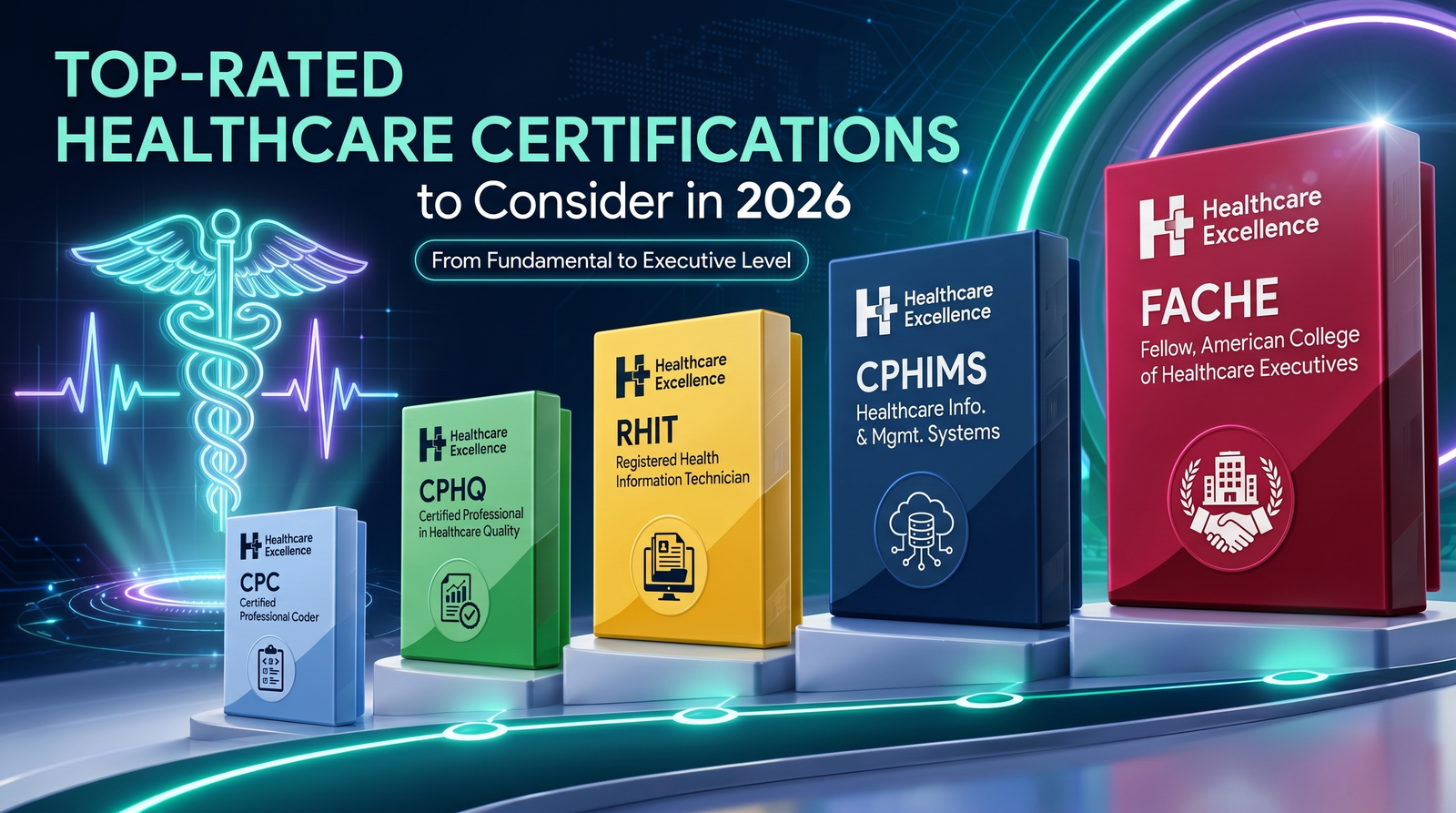
The following certifications continue to receive strong recognition across healthcare organizations and align with growing industry demands.
| Certification | Primary Focus | Ideal For |
|---|---|---|
| CPC (Certified Professional Coder) | Medical Coding | Coding and billing professionals |
| CPHQ (Certified Professional in Healthcare Quality) | Quality Improvement | Quality and compliance specialists |
| RHIT (Registered Health Information Technician) | Health Information Management | Data and records professionals |
| CPHIMS | Healthcare Information Systems | Healthcare IT professionals |
| CCM (Certified Case Manager) | Patient Care Coordination | Case managers and nurses |
| FACHE | Healthcare Leadership | Healthcare executives and managers |
Medical coding remains one of the most stable non-clinical healthcare career paths. The Certified Professional Coder (CPC) credential is highly respected and validates expertise in coding procedures, diagnoses, and healthcare documentation.
Healthcare providers, insurance organizations, and medical billing companies continue to rely on certified coders to ensure accurate claims processing and reimbursement. Many professionals view CPC as one of the best entry points into healthcare administration and revenue cycle management.
Healthcare organizations are placing greater emphasis on patient outcomes, performance improvement, and regulatory compliance. This trend has increased demand for professionals with expertise in healthcare quality management.
The Certified Professional in Healthcare Quality (CPHQ) credential demonstrates knowledge of quality improvement methodologies, patient safety initiatives, performance measurement, and healthcare analytics. Professionals who earn this certification often contribute directly to organizational improvement programs.
Healthcare facilities generate enormous amounts of patient data every day. Managing this information accurately and securely is essential.
The Registered Health Information Technician (RHIT) certification prepares professionals to oversee medical records, support health information systems, and ensure compliance with data management standards. As electronic health records continue to expand, RHIT-certified professionals remain in high demand.
Technology continues transforming healthcare delivery. From electronic health records to digital patient management systems, healthcare organizations require professionals who understand both healthcare operations and technology.
The Certified Professional in Healthcare Information and Management Systems (CPHIMS) credential is designed for professionals working at the intersection of healthcare and information technology. This certification can support career growth in healthcare IT management, system implementation, and digital transformation initiatives.
Case managers play a vital role in coordinating care, managing resources, and helping patients navigate complex healthcare systems.
The Certified Case Manager (CCM) credential demonstrates expertise in patient advocacy, care planning, and healthcare coordination. Professionals with this certification often work closely with patients, providers, and insurance organizations to improve healthcare outcomes and efficiency.
Healthcare leadership requires a combination of operational knowledge, strategic thinking, and management skills.
The Fellow of the American College of Healthcare Executives (FACHE) credential is widely respected among healthcare executives. It supports professionals pursuing senior management and leadership positions within hospitals, healthcare systems, and medical organizations.
Watch Cert Mage’s YouTube video to explain the best healthcare certifications: 📍
Rather than focusing on a single credential, many successful healthcare professionals build a certification pathway throughout their careers.
An entry-level certification may help secure an initial role, while advanced certifications can support promotions, specialization, and leadership opportunities. Continuous learning remains essential as healthcare regulations, technologies, and patient care models continue to evolve.
Many professionals use platforms such as Cert Mage to access certification preparation resources, practice materials, and exam-focused study support before pursuing industry-recognized credentials.
Healthcare certifications continue to provide significant value in 2026. They help professionals validate specialized skills, improve employability, and prepare for emerging opportunities across clinical, administrative, quality, and technology-focused healthcare roles.
Choosing a certification aligned with your career goals can be a practical step toward long-term professional growth and higher earning potential. As healthcare continues to evolve, certified professionals are likely to remain highly valued by employers seeking skilled and knowledgeable talent.
A short and clear breakdown can be found in an earlier X (Twitter) update from Cert Mage.
The best certification depends on career goals. Credentials such as CPC, CPHQ, RHIT, and CPHIMS are highly regarded because they align with growing healthcare sectors and expanding workforce demands.
Yes, many healthcare certifications help professionals demonstrate specialized expertise. Employers often value relevant certifications because they verify practical skills, industry knowledge, and commitment to ongoing professional development.
Certifications can improve earning potential by qualifying professionals for advanced positions, specialized responsibilities, leadership opportunities, and roles requiring verified expertise that employers may compensate at higher levels.
Many professionals pursue multiple certifications throughout their careers. Combining complementary credentials can expand expertise, improve career flexibility, strengthen professional credibility, and increase opportunities for advancement.
Read next: Best Healthcare Certifications for Career Growth and Higher Salaries